Clacton on the Tendring coast is home to one of our three volunteer groups. In this blog, chairman Roger Kennell introduces the group and their current project.

The volunteer members of the Group, founded as a collaboration with the VCH Essex in 2002, have met monthly ever since to research on a range of local history projects. It is a proud fact that the group have always produced positive outcomes from their research, disseminating findings through publications, exhibitions, site information boards or trail leaflets, and generally raising the awareness and understanding of local landscapes and history.
The Group’s current project is titled: ‘Great Clacton: its Church, Hall and Parks. The Legacy of the Bishops of London’
Our two-hour long meetings, which begin with a welcome tea of coffee, are held at Tendring Village Hall, and usually consist of a Power Point presentation on an aspect of the project followed by a discussion and planning as necessary.
These meetings can be flexible. At our October meeting the opportunity arose to welcome Neil Wiffen to provide his talk on ‘Towering Defences’, how a defence system against a Napoleonic invasion developed along the Essex and Suffolk shore.
The following month of November, we returned to our Great Clacton project. The Domesday Survey includes a single entry for Clachintuna, there then being no division into Great and Little Clacton. Listed is the following: ‘now 1 mill’. Hitherto, no location for this mill has been found, but during our session two probable places were identified, both being potential tide mill sites. One lay on the coast at Wash Lane with the Reed Land Pool, and the other, perhaps with more evidence including field names and track ways, being on the Holland River near Clacton Park.
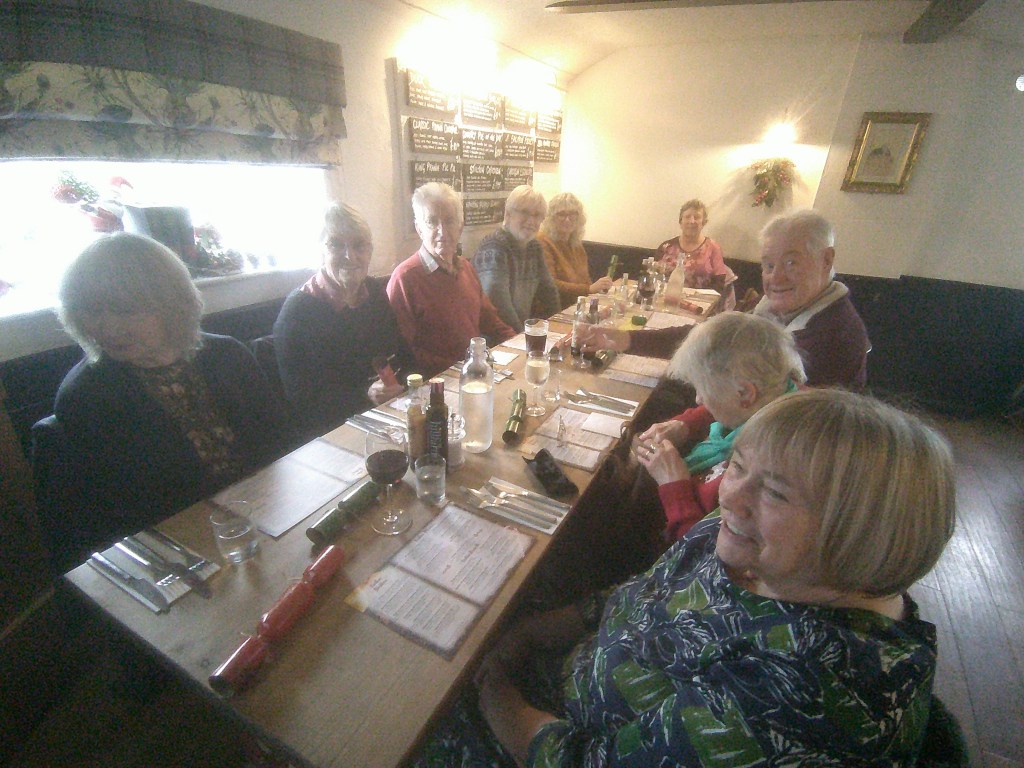
At the December meeting, being a festive time and one for reflection, an illustrated glance back at some of our previous projects was enjoyed. This was especially helpful to some of our more recent members to highlight our range of research and record of positive project outcomes.
We are now underway with planning the New Year, 2026. January will see a meeting to examine and interpret the recent report on a resistivity survey of the churchyard of the parish church of Saint John. This report has the potential to increase our understanding of the manorial complex of the bishop’s of London, including their ‘stately house’.

The Clacton VCH Group intends to provide a further blog update as our research continues.
Roger Kennell
Chairman, Clacton VCH Group
 Victoria County History of Essex